

Overview
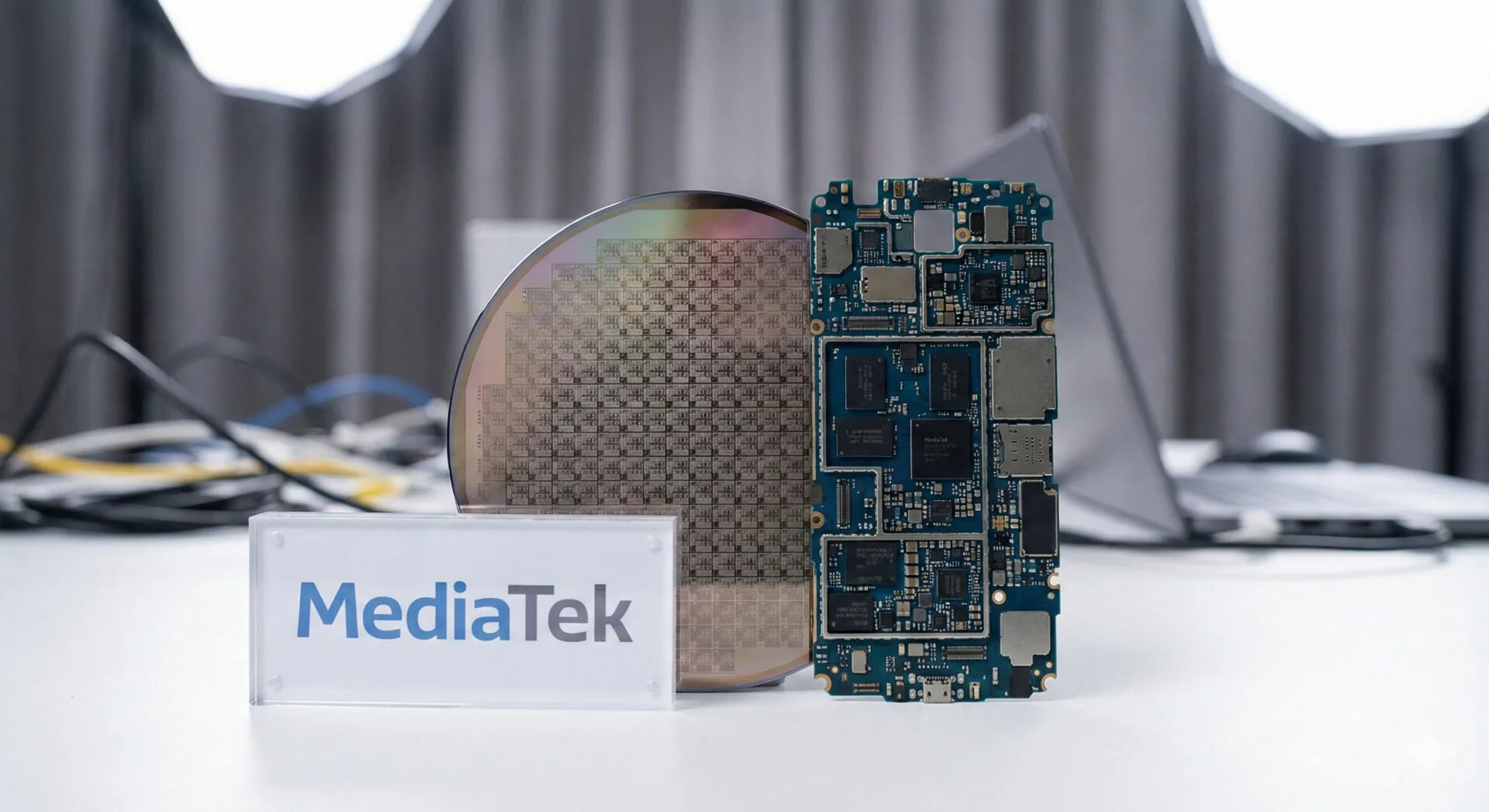
MediaTek has announced two new mobile processors aimed at the top and upper-mid tiers of the Android market: the Dimensity 9500s, a refreshed flagship built on a 3nm process, and the Dimensity 8500, a new 4nm midrange platform. The company positions both chips around an “All Big Core” CPU philosophy—prioritizing higher-performance cores across the cluster—alongside upgraded graphics, imaging, and on-device AI capabilities.
The flagship 9500s follows last year’s Dimensity 9500 (introduced in September) and retains the same headline architectural direction while boosting CPU and platform features. The Dimensity 8500, meanwhile, brings a similar all-big-core concept to a lower power and cost envelope, with a focus on efficiency and mainstream gaming.
MediaTek’s announcement arrives as smartphone makers continue to market on-device generative AI features as a key differentiator. While MediaTek’s release is primarily about silicon, it also reflects a wider industry shift: AI systems are increasingly expensive to run at scale, pushing companies to optimize inference either on-device or through more efficient data access. In a separate AI-related development this week, Wikimedia—operator of Wikipedia—announced enterprise partnerships with major AI firms including Microsoft, Meta, Amazon, and others to provide high-throughput access to Wikimedia content and help offset the cost of massive automated usage.
What MediaTek announced
MediaTek’s two-chip launch targets different segments:
- Dimensity 9500s: a flagship SoC manufactured on 3nm, with an “All Big Core” octa-core CPU, Immortalis-class GPU, flagship NPU features, and premium connectivity including Wi‑Fi 7.
- Dimensity 8500: an upper-midrange SoC manufactured on 4nm, also with an “All Big Core” octa-core CPU design, a Mali GPU tuned for efficiency, a newer-gen NPU, and strong camera/display support.
MediaTek has not, in this announcement, tied either chip to specific phone models or launch timelines. Historically, new Dimensity platforms appear first in China-focused flagships and performance-oriented midrange devices before broader global adoption.
Tech Specs
Dimensity 9500s (flagship)
Process / CPU
– Manufacturing process: 3nm
– CPU configuration: Octa-core “All Big Core”
– 1× Arm Cortex‑X925 Ultra @ 3.73GHz
– 3× Cortex‑X4 premium cores
– 4× Cortex‑A720 performance cores
GPU / gaming
– GPU: Immortalis‑G925
– Gaming features: advanced ray tracing, Adaptive Game Technology 3.0, Frame Technology 3.0
AI / NPU
– MediaTek describes a flagship NPU aimed at “generative reasoning and multi-modal models” support.
Imaging / video
– ISP: MediaTek Imagiq
– Real-time motion tracking: up to 30fps
– Video: 8K 60 “full-focus” recording with Dolby Vision HDR
– Noise reduction support
– Max camera sensor: up to 320MP
Display / memory / storage
– Display: up to WQHD+ at 180Hz
– Memory: LPDDR5X
– Storage: UFS 4
Connectivity / power
– Wi‑Fi 7
– Dual SIM Dual Active (DSDA) 5G
– Satellite navigation: GPS, BeiDou, GLONASS, Galileo, NavIC, QZSS
– Bluetooth 5.4
– MediaTek UltraSave 4.0 power-saving technology
Dimensity 8500 (midrange)
Process / CPU
– Manufacturing process: 4nm
– CPU configuration: Octa-core “All Big Core”
– 8× Cortex‑A725 up to 3.4GHz
GPU / gaming
– GPU: Mali‑G720
– MediaTek claims up to 25% improved performance and 20% lower power consumption versus the previous generation.
AI / NPU
– NPU: MediaTek 8th-gen NPU 880
– Positioned as supporting “most” large language and image generation models.
Imaging / video
– Max camera sensor: up to 320MP
– Video: up to 4K 60fps
Display / memory / storage
– Display: up to WQHD+ at 144Hz
– Memory: LPDDR5X (4-channel)
– Storage: UFS 4
Connectivity / power
– Wi‑Fi 6E
– Bluetooth 5.4
– Dual SIM Dual Active (DSDA) 5G
– Satellite navigation: GPS, BeiDou, GLONASS, Galileo, NavIC, QZSS
– MediaTek UltraSave 3.0+
Performance and positioning: “All Big Core” goes mainstream
MediaTek’s continued use of an “All Big Core” CPU layout is a notable strategic choice. Traditional smartphone SoCs often rely on a mix of high-performance and efficiency cores (big.LITTLE-style balancing) to optimize idle and light workloads. MediaTek’s approach—at least in messaging—leans into higher-performance cores across the cluster.
In practice, the real-world impact will depend on:
- Scheduler tuning (Android kernel and OEM performance profiles)
- Thermal design of shipping phones (cooling solutions, chassis materials)
- Sustained power limits (how long peak clocks can be held)
The Dimensity 9500s’ inclusion of a Cortex‑X925 Ultra prime core at 3.73GHz suggests MediaTek is targeting peak responsiveness and short-burst performance, while the 8500’s eight Cortex‑A725 cores indicate an attempt to deliver consistent midrange performance without relying on a single ultra-high-power prime core.
Graphics and gaming: Immortalis vs Mali
On the flagship side, the Immortalis‑G925 is positioned for premium gaming features, including ray tracing. While ray tracing on mobile remains constrained by power and thermal limits, support at the silicon level can matter for:
- Future-facing game engines and effects pipelines
- More consistent feature parity with console/PC rendering techniques
- Marketing differentiation in gaming-focused handsets
For the Dimensity 8500, the Mali‑G720 is framed as a performance-per-watt improvement, with MediaTek claiming both higher performance and lower consumption than its predecessor. If those gains translate into shipping devices, the 8500 could be especially attractive for brands building “performance midrangers” where sustained frame rate matters more than peak benchmarks.
AI on-device: why NPUs are becoming headline features
Both chips emphasize NPU capabilities, reflecting a broader shift in how phones are marketed and used. On-device AI can reduce latency and reliance on cloud services for tasks like:
- Photo and video enhancement
- Voice transcription and summarization
- Generative image features and “assistant” workflows
- Real-time translation and contextual search
MediaTek’s language around the 9500s—generative reasoning and multi-modal models—suggests the company expects OEMs to ship more sophisticated, locally executed AI experiences.
This emphasis also aligns with the wider AI ecosystem’s cost pressures. Wikimedia’s newly announced enterprise partnerships with AI companies underscore how expensive large-scale AI access can be when it relies on constant, high-volume retrieval of web content. As AI firms seek more efficient pipelines for data access, device makers are simultaneously looking to push more inference onto phones to save on cloud compute and improve privacy.
Camera and video: 8K60 Dolby Vision on the flagship
The Dimensity 9500s’ imaging claims are squarely flagship-tier:
- Up to 320MP sensors
- 8K 60fps recording
- Dolby Vision HDR
- Real-time motion tracking (up to 30fps)
If implemented well by OEMs, that combination could enable high-end capture modes aimed at creators—particularly those who shoot short-form video and want HDR workflows straight from the phone.
The Dimensity 8500 keeps the same 320MP sensor ceiling but tops out at 4K 60fps, which is typical for strong midrange devices. For many buyers, 4K60 remains the practical sweet spot given storage, thermals, and editing workflows.
For readers comparing creator-friendly phones across price tiers, it’s worth cross-referencing chipset capabilities with actual device implementations—sensor choice, stabilization, ISP tuning, and microphone quality often matter as much as raw SoC support. If you’re shopping specifically for affordable video-first devices, see our internal guide: List of Budget Phones Ideal for Vlogging.
Connectivity: Wi‑Fi 7 differentiates the flagship
Connectivity is one of the clearest separators between the two platforms:
- Dimensity 9500s: Wi‑Fi 7
- Dimensity 8500: Wi‑Fi 6E
Wi‑Fi 7 can deliver higher peak throughput and better latency behavior in compatible networks, but real-world benefits depend on having a Wi‑Fi 7 router and a relatively uncongested environment. For most midrange buyers, Wi‑Fi 6E remains a strong baseline, especially where 6GHz spectrum is available.
Both chips include:
- DSDA 5G (dual SIM dual active)
- Broad GNSS support: GPS, BeiDou, GLONASS, Galileo, NavIC, QZSS
- Bluetooth 5.4
Power efficiency: 3nm vs 4nm—and UltraSave generations
MediaTek pairs each chip with a different UltraSave generation:
- 9500s: UltraSave 4.0
- 8500: UltraSave 3.0+
On paper, the 3nm 9500s should provide better efficiency at a given performance level versus older nodes, but flagship phones also tend to push higher sustained performance targets, which can offset node advantages. The 4nm 8500, by contrast, may land in a more conservative power envelope, potentially yielding strong battery life in well-tuned devices.
Ultimately, endurance will be determined by OEM choices: display size/brightness targets, modem configuration, thermal solutions, and software power policies.
What to watch next
With the Dimensity 9500s and 8500 now official, the next signals to monitor are:
- First shipping devices: which brands adopt each SoC first, and in which regions
- Thermal and sustained performance: whether “all big core” designs hold up under long gaming sessions
- Camera pipelines: how OEMs use 8K60 HDR support (and whether it’s practical without overheating)
- On-device AI features: which generative tools are actually enabled at launch, and whether they run locally or hybrid (local + cloud)
MediaTek’s two-chip strategy suggests a continued push to bring flagship-style features—high refresh displays, advanced ISPs, and on-device AI—down into more accessible price tiers, while reserving Wi‑Fi 7 and the top-tier GPU/NPU stack for premium devices.
Sources
- Primary: GSMArena report on MediaTek’s Dimensity 9500s and 8500 announcement
- Corroborating context on AI ecosystem costs and partnerships: Engadget report on Wikimedia’s AI enterprise partners
Source: Read Original Article






Leave a Reply