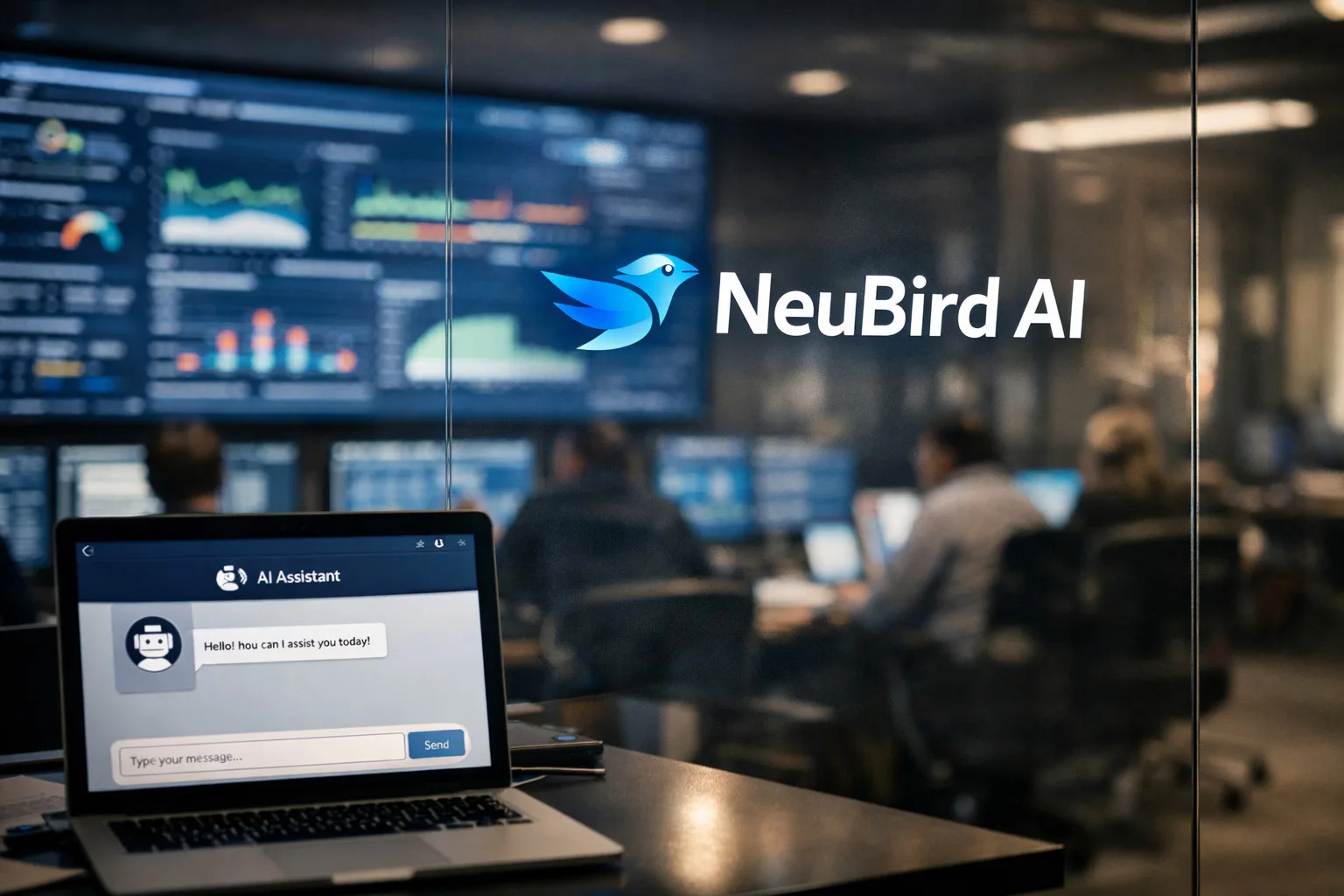

NeuBird AI bets on autonomous reliability with Falcon and FalconClaw
NeuBird AI is entering the fast-heating “agentic operations” arena with the launch of Falcon and FalconClaw, a pair of AI agents positioned to prevent, detect, and fix software issues with far less human intervention than traditional monitoring and incident-response workflows.
The pitch is simple—and undeniably hype-worthy for teams drowning in alerts: instead of operators hopping between dashboards, logs, tickets, and runbooks, these agents aim to close the loop from early warning to diagnosis to remediation. In practice, that means moving from “observability tells you something is wrong” to “an agent figures out what’s wrong and proposes or executes the fix.”
While the broader industry has talked about AIOps for years, the current wave is different: large language models and tool-using agents can now reason across messy, multi-source telemetry and take structured actions through APIs. NeuBird’s announcement lands right in that moment.
Why this matters: the end of alert fatigue (if it works)
Modern production environments are noisy by default:
- Microservices multiply failure modes.
- Kubernetes adds orchestration complexity.
- CI/CD pushes changes constantly.
- Dependencies sprawl across SaaS, cloud services, and internal platforms.
The result is familiar to every SRE and DevOps team: alerts everywhere, clarity nowhere. Even “good” incidents often devolve into:
- A flood of pages.
- A scramble to correlate signals.
- A slow path from symptom → root cause.
- A fix that’s obvious in hindsight but costly in the moment.
NeuBird AI’s Falcon family is aimed at compressing that cycle—ideally turning hours of war-room time into minutes of automated analysis and action.
What NeuBird AI is launching
NeuBird AI’s launch includes two named components:
Falcon: the agent for prevention, detection, and diagnosis
Falcon is positioned as the “brain” that continuously monitors systems, correlates signals, and identifies problems early. Think of it as an always-on investigator that can:
- Watch for anomalies and regressions.
- Connect the dots across telemetry sources.
- Produce a narrative of what happened and why.
In the current generation of ops tooling, this “storytelling” layer is the missing piece—teams have data, but not synthesis.
FalconClaw: the agentic execution layer
FalconClaw is framed as the “hands”—the component that can help apply fixes. In agentic systems, execution is where hype meets reality, because production changes require guardrails.
If implemented with strong controls, an execution agent can:
- Trigger safe, pre-approved runbooks.
- Roll back deployments.
- Adjust configurations.
- Open PRs with suggested changes.
- Create tickets with full context and recommended next steps.
The key question is how NeuBird AI balances autonomy with safety—especially in environments with strict compliance and change-management requirements.
The bigger trend: from AIOps to agentic SRE
AIOps traditionally focused on:
- Event correlation
- Alert deduplication
- Basic anomaly detection
Agentic SRE goes further by combining:
- Reasoning (LLM-style synthesis)
- Tool use (APIs, CLIs, runbooks)
- Action (automated remediation)
This is the same “AI agent” shift playing out across other domains—nutrition apps, wellness, and personalization included. If you want a parallel example of how personalization engines are evolving into goal-driven agents, see our internal deep dive: The Role of AI Personalization in Apps Like AVA for Smarter Nutrition.
In ops, the stakes are higher—but the opportunity is massive.
How Falcon-style agents typically work (what to look for)
NeuBird AI has not provided a full technical blueprint in the prompt context here, but products in this class generally follow a pattern:
1) Ingest and normalize telemetry
Agents pull from:
- Logs (application + infrastructure)
- Metrics (time-series)
- Traces (distributed tracing)
- Events (deployments, config changes)
- Incident history (tickets, postmortems)
2) Correlate across systems
Instead of treating signals as isolated, the agent builds a graph of relationships:
- Which service calls which dependency
- Which deployment preceded the error spike
- Which region or cluster is affected
3) Generate hypotheses and rank likely causes
This is where LLM reasoning (plus statistical detection) can shine:
- “A new release increased latency in service X, cascading to timeouts in service Y.”
- “A database connection pool is exhausted due to retry storms.”
4) Recommend or execute remediation
Depending on policy:
- Suggest fixes with confidence scores
- Require human approval
- Auto-execute only “safe” actions
Where this could hit hardest: the incident lifecycle
Falcon and FalconClaw target multiple points of the incident lifecycle:
Prevention
Prevention is the most ambitious claim. In practice, “prevention” often means:
- Detecting risky conditions before they become outages
- Identifying regressions right after deployment
- Catching capacity issues before saturation
If Falcon can reliably spot early indicators and tie them to specific changes, it becomes a powerful safety net for high-velocity teams.
Detection
Detection is table stakes in observability—but agentic detection can be smarter:
- Fewer false positives
- Better grouping of related alerts
- Faster identification of blast radius
Diagnosis
Diagnosis is where teams lose the most time. The promise here is:
- One consolidated incident narrative
- Clear suspected root cause
- Supporting evidence (logs/metrics/traces)
Remediation
Remediation is the “wow” factor—especially if it can:
- Roll back a bad deploy
- Restart only the affected components
- Apply a pre-approved config change
In practice, the best early wins for remediation agents tend to be repetitive, well-understood fixes—exactly the kind SREs hate doing at 3 a.m.
Tech Specs
Below is a practical, buyer-focused spec view of what matters for Falcon/FalconClaw-style agent platforms. Because the source content was unavailable in the provided scrape, treat this as a spec checklist and expectation framework—the items you should confirm in NeuBird AI’s documentation, demos, or security review.
Core capabilities
- Signal ingestion: logs, metrics, traces, events, and incident artifacts
- Correlation engine: service dependency mapping and change correlation
- Root-cause analysis: hypothesis generation with evidence linking
- Action orchestration: runbook execution, rollback triggers, ticket/PR creation
- Human-in-the-loop controls: approvals, policy gating, and audit trails
Integrations to verify
- Observability: Datadog, New Relic, Grafana
- Cloud: AWS, Azure, Google Cloud
- DevOps: GitHub/GitLab, CI/CD tools, Kubernetes
- ITSM: ServiceNow/Jira
Safety and governance
- Role-based access control (RBAC) for agent actions
- Change policy enforcement (what can be auto-executed vs. suggested)
- Audit logging for every agent decision and action
- Sandbox or dry-run mode for remediation plans
- Secrets handling (vault integration, no plaintext secret exposure)
Model and data posture
- Data retention and training policy (customer data used or not used)
- Isolation (single-tenant vs. multi-tenant options)
- Prompt/tooling security (preventing unsafe tool calls)
Competitive landscape: everyone wants the “autonomous ops” crown
NeuBird AI is launching into a crowded, high-energy space where incumbents and startups are racing to add agentic layers on top of observability.
The differentiators that tend to matter most:
- Time-to-value: how fast it connects to your environment and produces useful insights
- Precision: fewer hallucinations and fewer false correlations
- Action safety: strong guardrails around remediation
- Explainability: clear evidence trails operators can trust
- Workflow fit: integrates with how teams actually run incidents
If Falcon and FalconClaw can deliver reliable diagnosis plus safe remediation, that’s a meaningful leap beyond “AI summarization” features that only rephrase alerts.
What to ask in a demo (the real-world questions)
If you’re evaluating NeuBird AI’s Falcon/FalconClaw, push beyond the marketing and ask:
- Show me a real incident replay: Can Falcon reconstruct what happened from telemetry and changes?
- How does it rank root causes? What evidence is required to make a claim?
- What can FalconClaw execute automatically? Is there a policy engine?
- How does it prevent unsafe actions? What are the guardrails and audit logs?
- How does it handle partial outages? Can it identify blast radius precisely?
- How does it learn from postmortems? Can it improve recommendations over time?
The hype factor: why “agents” could finally stick in ops
Ops is one of the most tool-saturated domains in software, yet teams still rely heavily on human intuition during incidents. Agentic systems are compelling because they can:
- Maintain context across dozens of signals
- Work continuously without fatigue
- Apply consistent runbook logic
- Reduce mean time to resolution (MTTR)
But the bar is high: production systems punish overconfidence. The winners will be the platforms that can prove their reasoning, limit their autonomy appropriately, and earn trust through repeatable outcomes.
What happens next
NeuBird AI’s Falcon and FalconClaw launch is a clear sign that the market is shifting from “AI-assisted dashboards” to AI-operated workflows.
If NeuBird can demonstrate strong integrations, reliable correlation, and safe remediation controls, Falcon/FalconClaw could become the kind of tool SRE teams don’t just try—they keep.
For now, the most important takeaway is the direction: closed-loop, agent-driven reliability is no longer a concept pitch. It’s becoming a product category.
Source: Read Original Article





Leave a Reply