
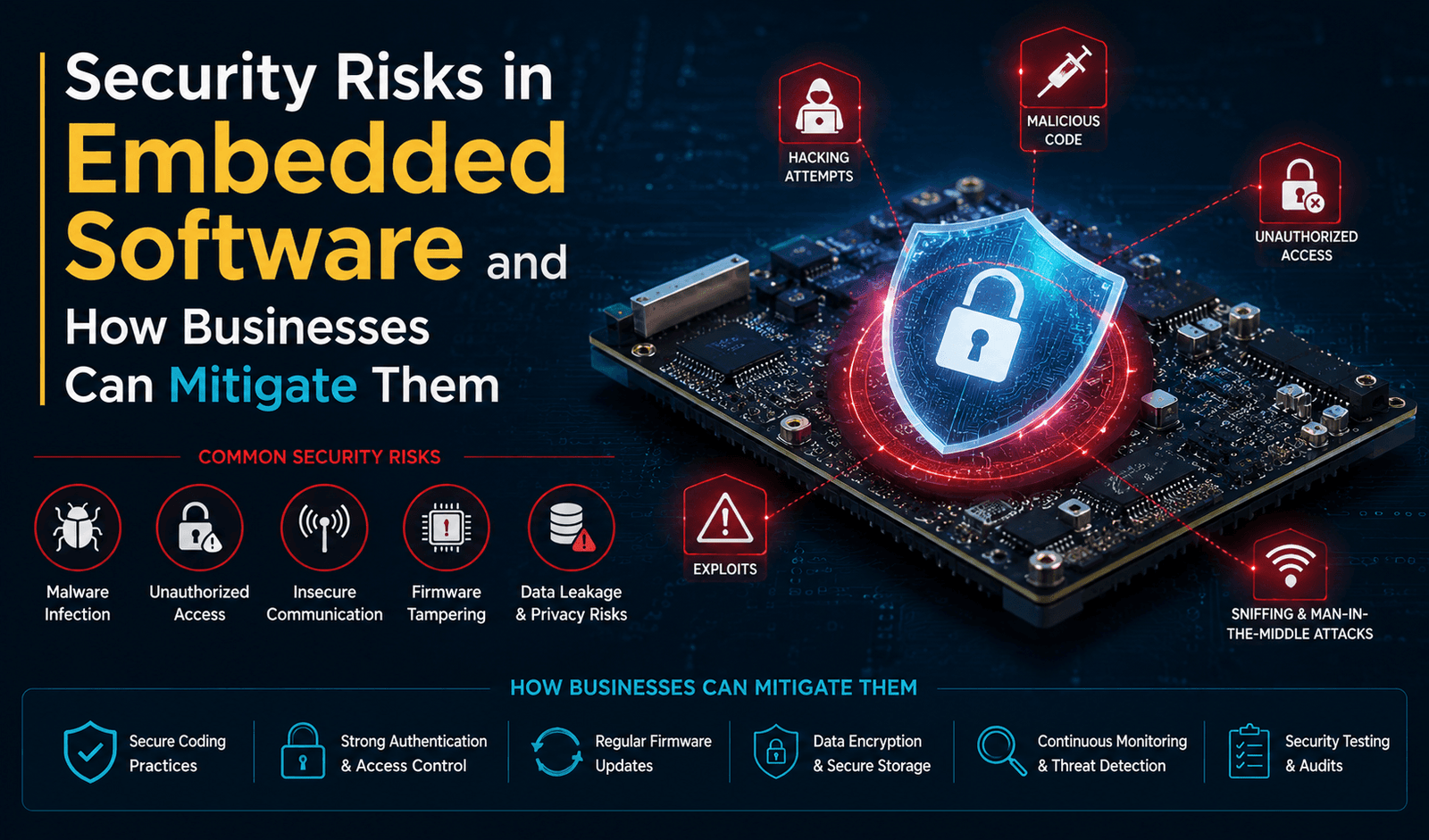

Embedded systems power a large part of modern infrastructure—from industrial machines and automotive controllers to medical devices, smart home appliances, and IoT sensors. As these systems become more connected, their exposure to cyber threats increases significantly. Unlike traditional software, embedded systems often operate with limited computing resources, long lifecycle deployments, and minimal patching mechanisms, which makes security even more complex.
Recent industry research highlights the growing concern. According to the ENISA Threat Landscape Report (2024), attacks targeting IoT and embedded devices increased by more than 35% year-over-year, driven largely by insecure firmware and weak authentication mechanisms. Meanwhile, a Gartner report (2023) estimated that over 70% of IoT security breaches originate from vulnerabilities in device firmware and embedded software layers. The Microsoft Digital Defense Report (2024) also noted a rising trend in attackers exploiting unmanaged edge devices as entry points into enterprise networks.
These findings make it clear that embedded systems are no longer isolated components—they are active attack surfaces in connected ecosystems.
Why Embedded Software Becomes a Security Target
Embedded software operates in environments where performance and reliability often take priority over security hardening. Devices are designed to run for years with minimal updates, which creates long-term exposure.
Several factors make embedded systems attractive targets:
- Limited processing power restricts advanced security mechanisms
- Devices often ship with default credentials
- Firmware updates are infrequent or not encrypted
- Physical access is possible in many industrial deployments
- Communication protocols may lack strong encryption
In industrial environments, attackers do not always target the device itself. Instead, they exploit it as an entry point into larger enterprise networks.
Common Security Risks in Embedded Software
Weak Firmware Protection
Firmware is the core of embedded systems, yet it is often poorly protected. Attackers can reverse engineer firmware images to discover vulnerabilities, extract credentials, or modify behavior.
Insecure Communication Channels
Many embedded devices transmit data using unencrypted protocols or weak authentication methods. This exposes sensitive data such as sensor readings, device commands, or user information.
Lack of Secure Boot Mechanisms
Without secure boot validation, malicious firmware can be loaded onto devices during startup. This allows attackers to persist even after resets.
Memory and Buffer Vulnerabilities
Embedded software frequently uses low-level programming languages like C and C++, which are prone to buffer overflows, memory leaks, and pointer misuse. These issues can lead to remote code execution.
Poor Access Control
Many devices do not implement role-based access or strong authentication layers. This allows unauthorized users to gain administrative control.
Outdated Components and Libraries
Embedded systems often run on outdated third-party libraries that no longer receive security updates. This increases exposure to known exploits.
Real-World Industrial Case Example
A well-known example comes from the Mirai botnet attack, which targeted IoT devices such as cameras and routers. The malware exploited default credentials and insecure embedded firmware, turning thousands of devices into a large-scale botnet used for DDoS attacks.
In another industrial scenario, a manufacturing company experienced disruption when attackers accessed unsecured PLC (Programmable Logic Controller) devices. The breach occurred due to unpatched embedded firmware and weak network segmentation. Attackers were able to manipulate machine behavior temporarily, causing production delays and financial losses.
These cases highlight how embedded vulnerabilities can escalate into enterprise-wide operational risks.
How Businesses Can Mitigate Embedded Software Risks
Secure Software Development Practices
Organizations must integrate security into every stage of Embedded Software Development rather than treating it as an afterthought. This includes secure coding guidelines, threat modeling, and code review practices.
Key practices include:
- Input validation at the device level
- Memory-safe programming techniques
- Secure API design
- Encryption of sensitive data in storage and transit
Firmware Security and Update Management
Secure firmware is critical to protecting embedded systems. Businesses should implement:
- Signed firmware updates
- Encrypted firmware storage
- Secure boot validation
- Over-the-air (OTA) update mechanisms
Regular patch management ensures that known vulnerabilities are addressed quickly.
Strong Authentication and Access Control
Embedded systems must avoid default credentials and implement robust authentication mechanisms such as:
- Multi-factor authentication for administrative access
- Device-level identity management
- Role-based access control (RBAC)
- Certificate-based authentication for machine-to-machine communication
Network Segmentation and Isolation
One of the most effective mitigation strategies is isolating embedded devices from core enterprise networks. This limits lateral movement if a device is compromised.
Techniques include:
- VLAN segmentation
- Zero-trust architecture principles
- Firewalls between the device and cloud layers
- Restricted API gateways
Secure Communication Protocols
All data transmitted by embedded systems should use encryption standards such as TLS or DTLS. Lightweight, secure protocols ensure that even low-power devices maintain data protection without degrading performance.
Continuous Monitoring and Threat Detection
Security does not end after deployment. Businesses should implement real-time monitoring systems that track device behavior and detect anomalies.
This includes:
- Log analysis from embedded devices
- Behavioral anomaly detection
- Intrusion detection systems for IoT networks
- Automated alerting for abnormal device activity
Role of Embedded Software Services in Security Architecture
Modern enterprises rely on specialized embedded software services to design, audit, and maintain secure device ecosystems. These services help organizations implement security frameworks aligned with industry standards such as IEC 62443 and ISO/IEC 27001.
They typically support:
- Secure firmware architecture design
- Vulnerability assessment and penetration testing
- Secure OTA update systems
- Hardware-level security integration
- Lifecycle security management
By integrating security expertise early, organizations reduce long-term risk exposure and maintenance costs.
ROI and Business Impact of Embedded Security Investments
Investing in embedded security delivers measurable business value. Industry studies show that the cost of addressing vulnerabilities after deployment can be up to 6 times higher than fixing them during development.
Organizations that implement strong embedded security frameworks typically experience:
- Reduced downtime caused by device failures or attacks
- Lower incident response costs
- Improved regulatory compliance readiness
- Longer device lifecycle reliability
- Reduced risk of reputational damage
In industrial environments, even a short outage in embedded-controlled systems can result in significant production losses, making preventive investment financially justified.
Final Thoughts
Embedded systems have become deeply integrated into critical infrastructure, industrial operations, and everyday consumer devices. As connectivity increases, so does exposure to security threats.
Risks such as insecure firmware, weak authentication, unpatched components, and unsafe communication protocols can no longer be ignored. Businesses must treat embedded security as a core engineering requirement rather than an optional layer.
A structured approach that includes secure Embedded Software Development, continuous monitoring, and professional embedded software services helps organizations build resilient systems capable of withstanding modern cyber threats.
As embedded ecosystems continue to expand, security will remain a defining factor in system reliability, operational stability, and long-term business continuity.






Leave a Reply