
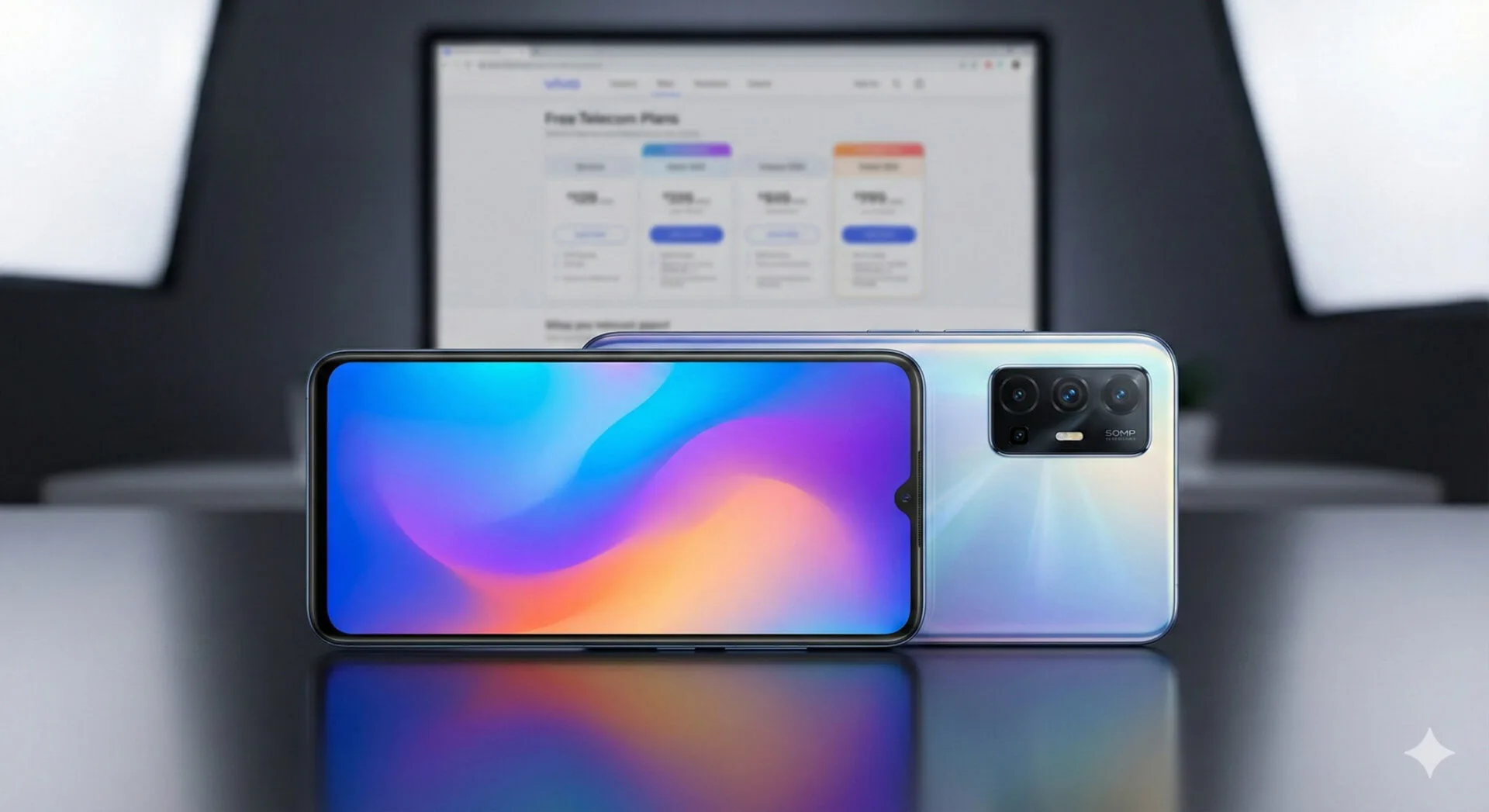

What the China Telecom listing suggests about vivo’s S50 launch
An online listing attributed to China Telecom has surfaced ahead of vivo’s imminent S50-series debut in China, and it reads like the kind of pre-launch disclosure that leaves little to the imagination. According to the listing, the standard vivo S50 is positioned as a performance-forward mid-to-upper-tier device built around Qualcomm’s Snapdragon 8s Gen 3, paired with high memory and storage ceilings, a high-resolution AMOLED panel, and a standout 6,500mAh battery.
While carrier/retailer database entries are not the same as an official launch announcement, China Telecom listings have historically been a reliable source of early hardware disclosure in the Chinese market because they often require a near-final configuration for inventory, pricing, and compatibility workflows. In other words, the presence of a complete spec sheet strongly implies the device is in a late stage of launch readiness.
The leak also provides a useful snapshot of vivo’s strategy for the S-series in China—balancing the S-line’s traditional focus on design and cameras with a more overt emphasis on sustained performance and endurance.
Why this leak matters: the S-series and the shifting “upper-mid” battleground
Vivo’s S-series has generally lived in the space between mainstream midrange and flagship, often prioritizing camera features, thin-and-light industrial design, and display quality. In China, this segment has become increasingly crowded and technically aggressive: buyers expect near-flagship responsiveness, fast charging, and credible camera hardware—without paying top-tier flagship prices.
That context makes the reported Snapdragon 8s Gen 3 choice especially telling. Qualcomm created the “8s” tier to deliver much of the flagship Snapdragon 8 experience at a lower cost, typically with more flexible thermal and power envelopes. That makes it attractive for devices that want to advertise “Snapdragon 8-class” performance but still hit pricing targets.
The other headline component is the battery. A 6,500mAh cell is large by any modern smartphone standard—more typical of rugged phones, gaming phones, or endurance-focused models. If accurate, it suggests vivo is leaning into longer runtime as a primary selling point, potentially enabled by higher-density battery tech and careful internal packaging.
Tech Specs
Below are the key specifications reported in the China Telecom listing (as reflected in the source summary):
- Chipset: Qualcomm Snapdragon 8s Gen 3
- Memory / Storage: Up to 16GB RAM and 512GB storage
- Display: 6.59-inch AMOLED, 2750 × 1260 resolution
- Software: Android 16-based OriginOS 16
- Battery: 6,500mAh
- Camera (partial in source): 50MP primary (remaining camera details not fully visible in the provided excerpt)
Because the provided source snippet cuts off mid-camera description, only the explicitly stated camera detail (50MP main) can be treated as confirmed by the listing summary here.
Snapdragon 8s Gen 3: what vivo gains (and what it implies)
The Snapdragon 8s Gen 3 is designed to deliver a large portion of Qualcomm’s contemporary flagship experience while sitting below the true top-bin Snapdragon 8 Gen 3 class in positioning. In practical terms, phones built on the 8s line typically aim for:
- High peak performance for app launch speed, gaming, and heavy multitasking.
- Improved sustained performance versus older flagship chips that may throttle harder under prolonged loads.
- Cost efficiency that allows manufacturers to invest elsewhere—battery size, camera sensors, display, or materials.
For vivo, using the 8s Gen 3 in the S50 signals a desire to compete on raw responsiveness and gaming competence, not only on aesthetics and portraits.
It also has implications for device thermals and design. A chip in this class generally benefits from a robust cooling solution (vapor chamber, graphite layers, thermal gel, or a combination). If vivo is indeed aiming for a sleek S-series profile while also packing a 6,500mAh battery, internal space management becomes a key engineering challenge: you can’t simply “add everything” without trade-offs. The final product will reveal how vivo balances thickness, weight, and sustained performance.
Display: 6.59-inch AMOLED at 2750 × 1260
The listing points to a 6.59-inch AMOLED display with a 2750 × 1260 resolution. That pixel count is notable because it sits above standard 1080p-class panels while not reaching the full 1440p tier seen on some premium flagships. It’s a common sweet spot in 2024–2025 devices: higher clarity and UI sharpness without the full battery and GPU cost of driving a true QHD panel.
AMOLED also remains central to the segment’s expectations:
- Per-pixel lighting enables deep blacks and high contrast, which helps HDR content and night viewing.
- Power efficiency can be better than LCD in dark UI scenarios because black pixels are effectively off.
- High refresh rate potential (not specified in the excerpt) is typically paired with AMOLED in this class.
Even without refresh-rate details in the provided summary, the resolution and panel type alone suggest vivo is targeting a premium viewing experience—especially important in China, where short-form video consumption and gaming are major usage drivers.
Battery: 6,500mAh and what it could mean day-to-day
A 6,500mAh battery is the kind of spec that changes how a phone is marketed and used. In a world where 4,800–5,500mAh has become common for mainstream phones, 6,500mAh is a clear step up.
If vivo delivers this capacity without making the phone unwieldy, it could translate into:
- Two-day endurance for many users under mixed usage (messaging, browsing, video, camera).
- More stable performance under load, since battery voltage sag and thermal constraints can influence sustained gaming sessions.
- Greater headroom for high-brightness use, such as outdoor navigation or extended camera shooting.
However, bigger batteries raise questions that only the final launch will answer:
- Charging speed and charging curve: A large cell benefits from fast charging, but heat management and battery longevity depend on how charging power is applied over time.
- Weight distribution: Larger batteries can shift the center of gravity, affecting one-handed comfort.
- Thermal design: Battery size competes with cooling system volume, which matters for a Snapdragon 8-class chip.
The listing excerpt does not mention charging wattage, so any conclusions about charging performance remain speculative.
Software: Android 16-based OriginOS 16
The listing claims the S50 will boot Android 16-based OriginOS 16. That combination is significant in two ways.
First, it indicates vivo is aligning the device with a modern Android baseline from day one, which can be a key selling point in China where software feature velocity is high and OEM skins compete on AI features, privacy controls, and cross-device integration.
Second, it underscores that the S50 is intended primarily for the Chinese market, where vivo ships OriginOS rather than the global Funtouch OS branding. OriginOS typically emphasizes:
- Heavier system-level customization and animations
- Deep integration with local services
- Aggressive feature rollouts tied to China-specific apps and ecosystems
For readers outside China, this detail is also a reminder that the exact software experience may differ if the hardware is later adapted into a global model or a differently named device.
For context, Android version claims in pre-launch listings can sometimes reflect internal planning rather than final shipping firmware. Still, including such a specific version pairing suggests the listing is pulling from a prepared product database rather than guesswork.
Memory and storage: up to 16GB RAM and 512GB
The reported ceiling of 16GB RAM and 512GB storage is consistent with the Chinese market’s appetite for high-spec configurations, particularly among buyers who keep devices for multiple years or use them for heavy multitasking.
Practically, 16GB RAM can help with:
- Keeping more apps resident before reloads (especially with heavier OEM skins)
- Smoother task switching during gaming + chat + streaming scenarios
- More headroom for on-device AI features (depending on how vivo implements them)
Meanwhile, 512GB storage aligns with increasing media sizes:
- Higher-resolution video capture
- Larger game installs
- Offline video caching
The listing summary doesn’t specify storage type (e.g., UFS generation) or RAM type (LPDDR generation), which are details that typically affect real-world performance and efficiency.
Camera: 50MP main confirmed in excerpt, broader expectations
The excerpt explicitly mentions a 50MP primary camera, but the remainder of the camera stack is cut off in the provided source text. Even so, a 50MP main sensor is a common “anchor” spec across the upper-mid segment because it can support:
- Pixel-binning for improved low-light performance (combining multiple pixels into one)
- Higher-detail daylight shots
- Flexible crop zoom for moderate magnification without a dedicated telephoto
What will matter most—beyond megapixels—is the combination of sensor size, lens aperture, stabilization (OIS/EIS), and vivo’s image pipeline tuning. The S-series historically leans into portraits, so it would not be surprising to see vivo emphasize skin tones, edge detection, and background separation.
Until the full camera specs are available (ultrawide resolution, selfie camera, telephoto lens, video modes), it’s best to treat the camera story as incomplete.
Positioning: performance, endurance, and premium display in one package
Taken as a whole, the leaked specification set points to a phone designed to win on three pillars:
- Performance credibility via Snapdragon 8s Gen 3
- Endurance leadership via a 6,500mAh battery
- Premium consumption experience via a high-resolution AMOLED panel
That combination is increasingly common as OEMs try to collapse the gap between “midrange” and “flagship” experiences. The differentiators then shift to details: camera tuning, thermal behavior, charging speed, haptics, speaker quality, and software polish.
The S50’s spec sheet, as listed, suggests Vivo wants buyers to feel they are getting a near-flagship daily driver without stepping into the most expensive tier.
What to watch for at the official debut
Because the listing is pre-launch, several critical details remain either unconfirmed or simply not included in the excerpted summary:
- Charging wattage and standards (wired and wireless, if any)
- Refresh rate and peak brightness of the AMOLED panel
- Ingress protection rating (IP rating)
- Complete camera system (ultrawide/telephoto/selfie, OIS, video specs)
- Connectivity specifics (Wi‑Fi generation, Bluetooth version, USB spec)
- Build materials and dimensions (how vivo fits 6,500mAh into the chassis)
Those items will determine whether the S50 is merely “strong on paper” or genuinely competitive in daily use against similarly priced rivals.
Broader implications for vivo and the market
If the China Telecom listing is accurate, vivo is pushing the S-series into territory that used to be reserved for more performance-oriented sub-brands: large battery, high-tier chipset, and a display spec that reads premium. That trend reflects a broader shift in the smartphone market:
- Incremental camera gains are no longer enough to differentiate; many phones take good photos in daylight.
- Battery anxiety remains universal, and bigger batteries are an easy-to-understand selling point.
- Chip branding still matters, especially in China, where Snapdragon 8-class naming carries consumer weight.
The result is a “spec escalation” cycle in the upper-mid segment—one that benefits buyers, but also raises expectations for thermal management, charging safety, and long-term software support.
For now, the vivo S50’s China Telecom appearance provides a detailed preview of what vivo appears ready to ship: a Snapdragon 8s Gen 3-powered phone with a sharp AMOLED display, modern Android-based software, and a battery capacity that could become a defining feature of the device’s identity.






Leave a Reply