
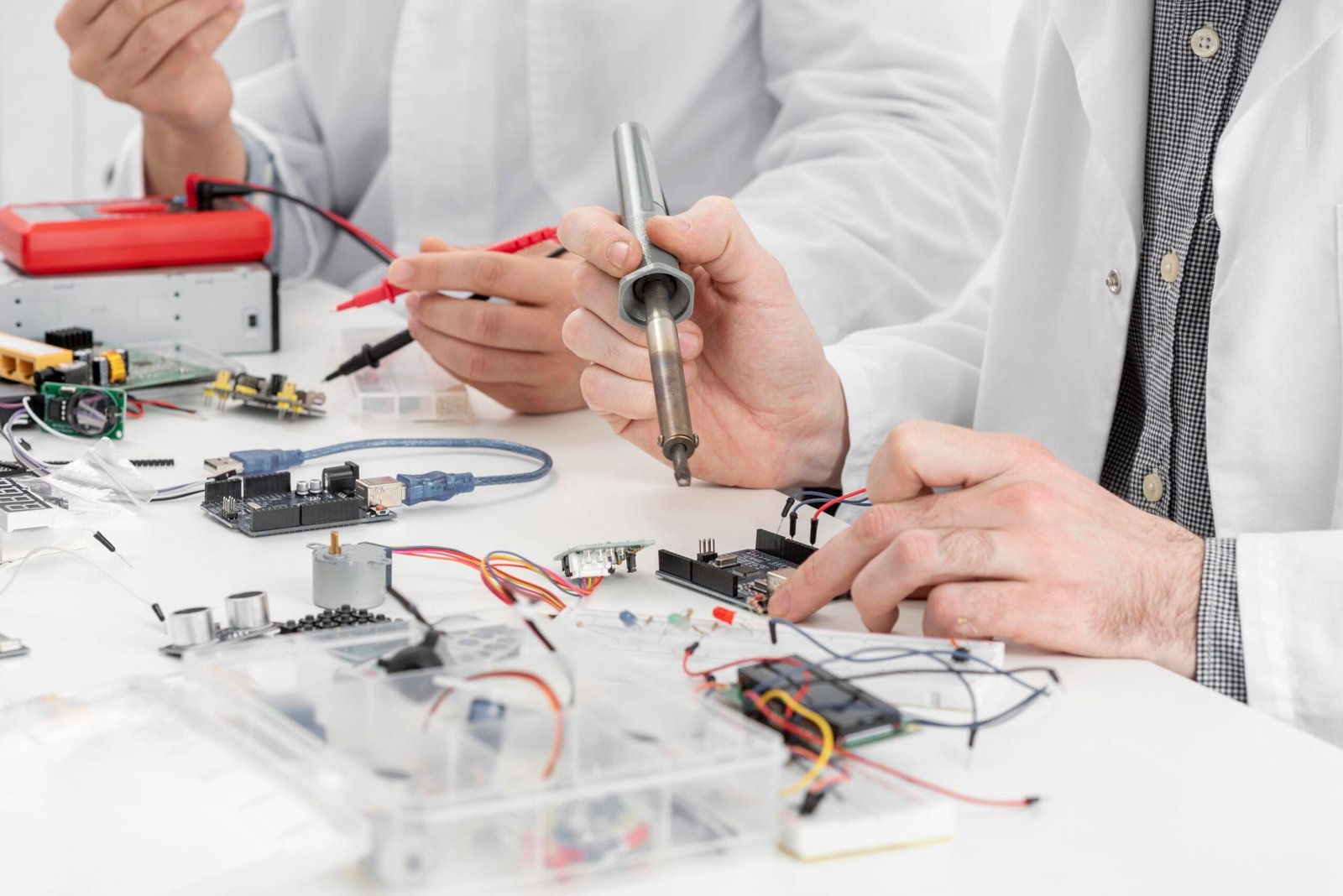

It should be, by rights, that people buy an electronic device and it works precisely as in the sales pitch. The buttons should operate identically, the screen should be identical, and none of my devices should perform better or worse than the other. Quality means – the product must flow the same every time. This level of quality is not just a goal to strive for, it is really a minimal expectation.
For device manufacturers, achieving such uniformity is a years-long process that’s carefully managed. It is not reliant upon just one step or department. It is constructed, instead, through planning, design, controlled production and ongoing surveillance. Here’s a look at how device manufacturers ensure each product meets the same standard, every time
Consistency Starts at the Idea Stage
Product consistency starts before you make anything. In the early planning phase, teams describe what the product will be and how it behaves. This could be size, electrical performance, sustainability, and even how it should feel in a user’s hand.
At this point, clear documentation is very important. When requirements are unambiguous, everyone has a common view. This clarity reduces confusion later, especially as products move from design to production.
Little decisions like component tolerances or power limits early on can make a significant difference in how uniform the final product is.
The Role of Strong Electronics Engineering
Good products are based on good engineering. Great electronics engineering is building systems that work in the real world as opposed to just the lab.
Engineers account for things like temperature variance, power fluctuation, long-term wear, and manufacturing variability — the inevitable drift of every real-world device from an ideal specification. Circuits are also made to be tolerant both for stability and forgiveness, such that differences in parts do not affect (that much) overall performance.
When product development teams account for these inevitabilities, products act predictably. This way, manufacturers have it easy when they have to produce thousands or even millions of pieces that are exactly alike.
Designing for Manufacturing from the Start
One of the biggest pitfalls is creating a great product in prototype, but finding it challenging to mass-produce. To head off such problems, device manufacturers adhere to design-for-manufacturing principles.
This involves choosing widely available components, using standard parts, and not overcomplicating things for the sake of it. Designs are reviewed by engineers, of course, but they’re also scrutinized by manufacturing pros who know what a line worker will have to deal with.
Design with manufacturing in mind. When a product is designed with the production process in mind, there are fewer “gotchas” that pop up when it comes to the actual production, and consistency will be more easily achieved.
Standardized Components and Controlled Sourcing
Consistency is highly dependent on the internal components used in an antenna. Even tiny differences between two of the same components could lead to performance, temperature, or longevity discrepancies.
That’s why manufacturers of devices carefully qualify suppliers and approve individual components. After any component’s approval, it is closely monitored. All supplier switches and part revision is tested and validated before going into production.
But in a modern electronics factory, traceability systems mean you can see which batch of components went into each product. This depth of control allows for quick issue identification and overall quality safeguarding.
Controlled Factory Environments Matter
Conditions of manufacture are also significant in maintaining control. Temperature, humidity, dirt, and static electricity are all electronic component killers.
These variables are carefully managed in a well-run consumer electronics factory. Production floors are climate-controlled to minimize environmental fluctuations, and machinery is regularly calibrated to ensure precision.
Output is constant when machines and environments do not change. But it’s most often overlooked when ensuring high-quality output.
Repeatable Processes and Clear Instructions
Consistency is the process of doing the same thing the same way, consistently. That is why the makers of devices depend on detailed process documentation.
All assembly steps, inspection methods, and handling instructions are compiled and standardized. Staff use explicit guidance and not just their recollection or personal discretion.
This approach makes sure that in mass production, each device is assembled like the other. In a high-product-volume electronics factory, process control may be the difference between mediocrity and excellence.
Automation Reduces Variation
Automation is employed to exclude the human dimension in vital steps. Machines are great for jobs that demand speed and accuracy, such as placing components or conducting a litany of identical tests.
An automated inspection system can detect minute defects often unnoticed by the human eye. Test for automated test stations, all units see the same conditions, so there is no bias or subjectivity in evaluating performance.
Device makers achieve this balance of flexibility and accuracy by pairing skilled human workers with automation, which is critical for retaining consistency on a mass scale.
Testing at Every Stage of Production
Testing is not just for the end result. Instead, it is distributed in the manufacturing process.
Components are inspected prior to being assembled, products are tested during production, and final devices undergo validation. In some cases, the units are also tested under stress to represent long-term use.
By doing this, layering of tests, we can ensure that things are caught early. A problem is easier to fix early, and it keeps shoddy products from reaching the customer’s door.
Software and Firmware Alignment
The same is true for modern devices – much of the device’s function is through software (pict. Even when hardware is flawless, a software crash in the firmware can produce unpredictable behavior.
To do that, makers of devices impose tight control over which software versions can be loaded. An approved build-only policy is in place in production, with updates being tested extensively before being released.
Sophisticated systems such as impact systems and GPT-like experimental tools can also be used to process performance data and discover patterns in that data. These tools allow teams to ensure that behavior remains consistent across a large number of devices.
Skilled Teams and Ongoing Training
We still need people to make that consistency happen. If workers are not adequately trained, even the best processes will fail.
Employers will spend on boarding, ongoing training and clear communication. Workers are motivated to complain and not find ways around them.
Once teams realise how important it is to remain consistent, they will work harder at it. This human aspect is probably the most important factor in the continuing maintenance of high standards.
Managing Changes Carefully
Change is necessary, but unplanned change is risky.
Everything, whether it be a design, part , or process change, is scrutinised. Updates are implemented, tested, and documented before being pushed live. This formal method guaranteesthat new inconsistencies to not be added by the enhancements.
In consciously controlling change, device makers ensure that as they continue to change, they don’t lose the excellence of the past.
Learning from the Field
Once products are in the hands of users, feedback is a valuable source of information. Reports from customers, warranty data, and usage analytics all show how products perform in real life.
Manufacturers analyze this data to find trends. If patterns look problematic, teams work back up the report to steps in design or production and address them.
This feedback loop enables future production enhancements and supports long-term consistency.
Final Thoughts
“Maintaining the quality of our product is an endless struggle that applies to every single stage of production.” It starts with careful planning, depends on strong electronics engineering, and is executed in disciplined processes within a consumer electronics factory.
By having controlled environments, repeatable workflows, skilled teams, and smart use of data and tools, device makers can still bring products that customers trust. Both production in a small garage space and at the large electronics factory both follow the same principles.
Consistency is not just about avoiding errors. It’s all about providing dependability, really gaining that trust and making products that people can count on day in and day out.






Leave a Reply